foldable phone. For years, it was a tech enthusiast’s dream, a glimpse into a sci-fi future that felt perpetually just out of reach. I watched from the sidelines as the first generations emerged—clunky, expensive, and fragile. But the whispers grew louder. The screens got better. The hinges became more robust. The software matured. The question shifted from “if” to “when.” When would the promise finally outweigh the peculiarity? So, I decided to stop spectating and dive in headfirst. I put my beloved, sleek slab smartphone in a drawer and committed to using a modern foldable phone as my primary device for 30 days. This is not a spec-sheet review; it’s a chronicle of a daily relationship with a piece of technology that fundamentally changes form. Here is the unfiltered truth.
The First Unfold: A Honeymoon of Screen Real Estate
The initial unboxing and setup were familiar, but the first deliberate unfold was a genuine “wow” moment. The transition from a compact, pocketable device to a miniature tablet is undeniably magical. My test device was a book-style foldable with a tall cover screen and a square-ish inner display. Immediately, the advantages were apparent. Reading articles, e-books, and PDFs became a joy. Scrolling through social media feeds felt less cramped. But the true revelation came with video. Watching movies and shows on that expansive, near-square canvas, with minimal bezels, was an experience my old phone could never match, even with its high-resolution screen. The immersion was tangible. For the first week, I found myself unfolding the device for tasks I would have never considered before—checking a complex email, browsing a website, or even just admiring photos in my gallery. The sheer pleasure of that unfolding action and the resulting screen space created a potent honeymoon period.
The Daily Grind: Adapting to a New Form Factor
As the novelty wore off, the reality of integrating a foldable phone into my daily routine set in. This was where the true test began. The first and most constant adjustment was the weight and thickness. Even folded, it’s a chunky boy. In my pocket, the difference was noticeable, especially in tighter jeans. The weight distribution is also different, feeling denser and more substantial. I grew accustomed to it, but I never forgot it was there.
The second major adaptation was learning when to fold and when to unfold. The cover screen is perfectly functional for quick tasks: sending a text, skipping a song, taking a photo. But the temptation to open it for anything more involved is strong. I developed a new muscle memory: pull it out of my pocket, thumb unlock the cover screen, decide if the task warrants the unfold. This split-second decision-making became a new ritual. Typing was a particular journey. On the cover screen, I relied heavily on swipe-typing. On the inner display, I could comfortably use a full-sized, two-thumb keyboard, which drastically improved my accuracy and speed for longer messages or emails.
The Multitasking Myth and Reality
Multitasking is the flagship software feature touted for every foldable phone. The theory is sound: a bigger screen means you can run multiple apps side-by-side. In practice, it’s a mixed bag. For specific workflows, it’s transformative. Following a recipe while watching a cooking video? Brilliant. Taking notes during a video call? Superb. Comparing two documents or websites? Incredibly useful.
However, for general, on-the-go use, I found it less revolutionary. The process of activating split-screen, choosing the apps, and adjusting the dividers still feels like a “mode” you enter, rather than a seamless flow. Often, by the time I set it up, I realized I could have just switched between apps normally. The true potential lies in persistent, task-specific setups, not spontaneous fragmentation. The table below breaks down my real-world multitasking use:
| Use Case | Frequency | Effectiveness | Notes |
|---|---|---|---|
| Maps + Music/Podcasts | Daily | High | Perfect for navigation without losing audio controls. |
| Messaging + Browser/YouTube | Several times a week | Medium | Useful for sharing links, but often one app demands full attention. |
| Email + Calendar | Weekly (for planning) | High | Excellent for planning meetings or trips. |
| Social Media + Social Media | Rarely | Low | Felt more distracting than productive. |
The Durability Elephant in the Room
No discussion about a foldable phone is complete without addressing durability. This was my single biggest concern. Every time I unfolded it, a tiny, irrational part of my brain wondered if this would be the time it failed. After 30 days, I can report: zero issues. The hinge remained smooth and firm. The inner screen’s crease, while visible under certain lighting and always palpable under my thumb, became background noise. I stopped noticing it during actual use within days. I was careful—I didn’t expose it to sand or dust storms, and I kept it away from curious pets—but I didn’t baby it either. It lived in my pocket, my bag, and on various surfaces. Modern foldables are far more resilient than their predecessors, but the psychological barrier is real. You are consciously caring for a more complex piece of hardware.
The Camera Conundrum and Battery Life
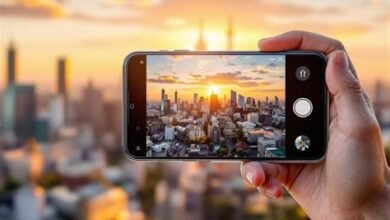
Foldables often make compromises to accommodate their unique engineering. In many models, the camera systems, while good, may not match the absolute best-in-class traditional flagships. My experience mirrored this. The cameras were very capable—great in good light, decent in low light—but not class-leading. The unique benefit, however, is using the inner display as a giant, steady viewfinder for selfies or group shots using the high-quality rear cameras. It’s a fantastic party trick and genuinely useful.
Battery life was a pleasant surprise. The larger form factor allows for a bigger battery, but it also has to power a much larger screen. My usage pattern—a mix of cover screen and inner display—consistently got me through a full day, ending around 15-20%. Heavy inner-screen use, especially with multitasking and brightness high, would require a mid-day top-up. It’s not endurance champion-level, but it’s perfectly adequate for most users.
The Verdict: Who Is This For?
After 30 days, the experiment concluded. I had to decide: go back to my old phone, or stick with the fold? The answer revealed the true nature of this device. Returning to my old phone felt… incredibly boring. The screen suddenly felt constrained, like I was looking at the world through a keyhole. I missed the immersive media consumption, the comfortable reading, and those moments of productive multitasking.
So, here is the truth, distilled. A foldable phone is not for everyone. If you prioritize absolute durability, the slimmest possible profile, or the very best camera above all else, a traditional flagship is still your best bet.
However, if you are a power user who consumes a lot of media, reads on your device, or could benefit from legitimate on-the-go multitasking, the foldable represents a tangible evolution. It consolidates a phone and a small tablet into one device, eliminating the need to carry and sync between two. The premium price is not just for a gimmick; it’s for a functional expansion of what a smartphone can be. It makes everyday interactions more enjoyable and certain tasks more efficient.
Final Thoughts on My Foldable Phone Journey
My 30-day journey taught me that the foldable phone has matured from a fragile prototype into a compelling, daily-driver product. The compromises are smaller, and the benefits are larger and more real than I anticipated. The “wow” factor doesn’t fade; it simply transforms from novelty into utility. It requires a slight mental and physical adjustment, but the reward is a more versatile and engaging portal to your digital life. I didn’t just switch back. The foldable had, quietly and convincingly, folded itself into my routine for good.
Frequently Asked Questions (FAQ)
- Is the crease on the inner screen really annoying? In daily use, you visually tune it out very quickly, especially with content on screen. You will always feel it when you swipe across the middle, but it becomes a non-issue for most users.
- How fragile is a foldable phone? Modern foldables are built with robust materials like ultra-thin glass and armored aluminum. They are not as fragile as early models, but they are still more complex than a traditional phone. Common-sense care is advised—avoid excessive dust, sand, and sharp pressure on the screen.
- Is the battery life worse because of the big screen? It can be, if you use the inner screen exclusively at high brightness. However, most users naturally use the cover screen for quick tasks, which balances battery consumption. Overall, battery life is generally on par with or slightly less than a traditional flagship.
- Are foldable phones good for one-handed use? When folded, yes—the cover screen is typically narrow and tall, making one-handed use quite good. When unfolded, it’s a two-handed device, just like a small tablet.
- Is the software experience smooth? Major Android manufacturers have significantly optimized their software (like Samsung’s One UI) for foldables. App compatibility is high, and most major apps adapt well to the larger canvas, though some may still have stretched layouts.
- Would you recommend a foldable as a primary phone? Yes, if your usage aligns with its strengths (media consumption, reading, multitasking) and you are comfortable with the form factor and price. It is now a fully viable primary device.