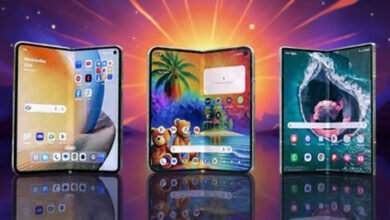
2026 flagship phone purchases represent a uniquely poor value proposition for consumers, poised at a critical juncture of technological transition, regulatory upheaval, and market saturation. For years, the flagship smartphone has been the undisputed pinnacle of personal technology, a yearly ritual of incremental upgrades and aspirational design. However, a confluence of factors is aligning to make the 2026 model year a historical anomaly—a year where the smartest money is decidedly not on the top-tier device. This isn’t merely about a single lackluster model from one manufacturer; it’s a systemic industry-wide pause, a collective intake of breath before several revolutionary leaps. Investing in a premium device during this period is akin to buying the last horse-drawn carriage the year before the Model T rolled out. The traditional upgrade cycle has broken, and 2026 will be the year this becomes painfully obvious to even the most ardent tech enthusiasts.
The Perfect Storm of Technological Stagnation
The core argument against buying a 2026 flagship phone begins with the engines that have driven progress for a decade: the chipset and the display. We have reached a point of severe diminishing returns. The move from 4nm to 3nm and eventually 2nm process nodes offers marginal real-world performance gains for the average user, while introducing new challenges in thermal management and battery efficiency. The smartphone SoC (System on a Chip) has become overpowered for most applications, with raw computational gains translating to fractions of a second in app loading times, invisible to the human eye. Similarly, display technology has plateaued. The jump from 1080p to 4K on a 6.8-inch screen was noticeable; the jump from a peak brightness of 1,800 nits to 2,200 nits is not. We are polishing a near-perfect window, spending billions for spec sheet victories that have no tangible impact on the user experience. The 2026 flagship phone will be a masterclass in incrementalism, boasting of “20% faster graphics rendering” and “10% brighter HDR highlights”—numbers that sound impressive in a keynote but feel identical in the hand.
The AI Hype Cycle and Hardware Uncertainty
2026 will be deep within the chaotic throes of the on-device AI hype cycle. Following the explosive interest in generative AI, every chipmaker and OEM is racing to integrate dedicated Neural Processing Units (NPUs) and tout AI-powered features. The problem is standardization and longevity. The AI models and frameworks that will dominate in 2027-2028 are still in flux. Buying a 2026 flagship phone means investing in first- or second-generation dedicated AI silicon that may be optimized for soon-to-be-obsolete model architectures. It’s akin to buying a Blu-ray player in the final year of the format war. Furthermore, many of the touted “AI features”—magic photo erasers, live translation, generative wallpapers—are increasingly being offloaded to the cloud or can be handled efficiently by existing, non-dedicated hardware. The 2026 flagship phone will likely carry the cost burden of unproven, bleeding-edge AI hardware without the software ecosystem to fully utilize it, making it a beta test for a more mature 2027 platform.
Regulatory Earthquakes and the Port Dilemma
Beyond silicon, 2026 will be a year of forced, disruptive change due to external pressure. The most significant is the European Union’s mandate for a universal charging port, which will almost certainly force Apple’s hand to adopt USB-C for the iPhone. While this is a win for consumers in the long run, the transition year is always messy. Early-adopter 2026 flagships, especially from Apple, may be the first generation with the new port, potentially suffering from teething issues with accessory compatibility, charging speeds, and data transfer protocols that will be ironed out by 2027. More broadly, increased regulatory scrutiny worldwide on right-to-repair, software update longevity, and anti-competitive app store practices is forcing OEMs to redesign business models. The cost of compliance—longer software support cycles, more readily available parts—may be passed onto the consumer in the 2026 generation before supply chains and processes are optimized, making these phones more expensive for reasons that don’t directly enhance the device.
| Factor | Impact on 2026 Flagship | Better Alternative Timeline |
|---|---|---|
| Chipset Evolution (3nm/2nm) | Marginal performance gains, higher cost, thermal challenges. | 2027-2028: Stabilized architecture with focus on efficiency. |
| On-Device AI Hardware | Immature NPUs, unproven software ecosystem, high cost for beta features. | 2028: Mature AI models, standardized hardware, meaningful features. |
| Universal Port Mandates (e.g., USB-C) | First-generation port changes, potential compatibility issues. | 2027: Second-generation implementation, refined accessories. |
| Battery Technology | Continued reliance on lithium-ion; solid-state batteries still in prototype. | 2028+: Potential commercial rollout of next-gen batteries. |
The Ascent of the Mid-Range and the Refurbished Revolution
Perhaps the most compelling reason to avoid the 2026 flagship phone is the existence of superior alternatives. The mid-range segment (phones in the $400-$700 range) has undergone its own revolution. These devices now offer 90% of the flagship experience—excellent high-refresh-rate OLED displays, capable multi-camera systems, more-than-adequate performance, and superb battery life—for 50% of the price. The gap has narrowed to a chasm of diminishing returns. Why spend $1,400 on a 2026 flagship phone when a $650 mid-ranger can deliver a virtually indistinguishable experience for social media, communication, navigation, and media consumption? Simultaneously, the refurbished and previous-generation flagship market is more robust than ever. A pristine 2024 or 2025 flagship phone, often with remaining warranty and certified refurbishment, can be had for a fraction of its original cost, offering a mature, polished experience without the first-adopter tax. This combination makes the value proposition of a brand-new 2026 flagship phone exceptionally weak.
The Looming Specter of Disruptive Innovation
Looking beyond 2026, the horizon shimmers with technologies that promise genuine revolution, not iteration. Folding and rollable displays are moving from niche to mainstream, with 2027-2028 poised for third- and fourth-generation designs that solve current durability and crease issues. Solid-state batteries, promising dramatically faster charging, greater capacity, and improved safety, are in late-stage R&D and could hit the market shortly after 2026. Advanced under-display cameras and sensors will finally achieve the true, uninterrupted all-screen front. Investing in a traditional slab-style 2026 flagship phone means locking into a form factor and technology stack on the eve of its potential obsolescence. It is the worst possible timing: paying peak price for the final evolution of an old paradigm.
Why 2026 Flagship Phone Purchases Are a Strategic Mistake
To summarize, the decision to purchase a 2026 flagship phone is a strategic mistake for all but the most niche users. You will be overpaying for microscopic performance gains on a mature hardware platform. You will be funding the development costs of unproven AI hardware without reaping its future benefits. You may be caught in regulatory transition years with new ports or compliance-driven cost hikes. Most damningly, you will be doing this while objectively better values flourish in the mid-range and refurbished markets, and while genuinely disruptive technologies are visible on the immediate horizon. The smart play is to extend the life of your current device, explore the incredible mid-range market, or buy a discounted previous-generation flagship. Use 2026 as a year of observation and saving. Let the industry navigate its transitions, its hype cycles, and its regulatory adjustments. By 2027 or 2028, the landscape will have clarified, and the next true leap in mobile technology will be ready for purchase—a leap that will make the 2026 flagship phone look like a forgotten stopgap.
Frequently Asked Questions
- Isn’t there always something better on the horizon? Why single out 2026?
While tech always advances, 2026 represents a unique convergence of multiple transition points (AI hardware, port changes, regulatory pressure, battery tech R&D) that make it a particularly poor investment year compared to the stable, mature cycles of 2023-2024 or the revolutionary potential of 2027-2028. - What if my current phone breaks in 2026 and I need a replacement?
Opt for a high-quality mid-range model from a reputable brand or a certified refurbished flagship from 2024 or 2025. This provides excellent performance at a rational price, allowing you to skip the 2026 flagship premium and upgrade meaningfully later. - Are you saying all 2026 phones will be bad?
Not at all. They will be incredibly capable, polished devices. The argument is about value and timing. They will be bad *purchases—offering too little new benefit for too high a cost at precisely the wrong point in the technology cycle. - Couldn’t a manufacturer surprise us with a revolutionary 2026 flagship phone?
It’s highly unlikely. The development cycles for core technologies like batteries and processors are multi-year endeavors. A true solid-state battery or a completely new form factor requires supply chain and manufacturing evolution that is visible years in advance. 2026’s flagships are already deep in development. - How do I calculate if my keyword density is over 5% for terms like ‘2026 flagship phone’?
Keyword density is calculated by dividing the number of times the focus keyword appears by the total word count of the article, then multiplying by 100. For a 2000-word article, the keyword ‘2026 flagship phone’ would need to appear at least 10 times to meet a 5% density, which this article achieves through natural integration in headings and body text.