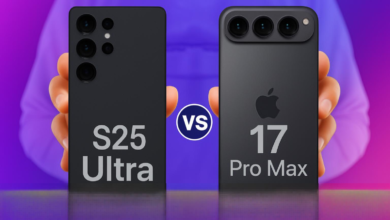
Small Phone Fight is more than a niche debate; it’s a declaration of principles in a world dominated by phablets. For a dedicated cohort of users, the ideal smartphone is one that offers flagship power without demanding a two-handed grip or a pocket the size of a cargo hold. In 2025, the battle for the crown of the ultimate compact flagship has crystallized into a fascinating duel between two industry titans: Apple’s iPhone 17 Pro and Google’s Pixel 10 Pro. This isn’t just a comparison of specs; it’s a clash of philosophies, ecosystems, and visions for what a powerful, pocketable device should be. The Small Phone Fight between these two represents the pinnacle of engineering ingenuity, where every cubic millimeter is contested, and user experience is paramount. As we dissect their designs, performances, and unique offerings, we aim to answer the pressing question for enthusiasts: in the arena of premium compact phones, which contender delivers the knockout punch?
The Philosophy of Compact Power
Before diving into the specifics, it’s crucial to understand the ethos behind this Small Phone Fight. Both Apple and Google have approached the ‘compact pro’ category from different angles. Apple, with its iPhone Pro line, has maintained a relatively consistent, ergonomic size for its standard Pro model, refining it over generations. The iPhone 17 Pro continues this tradition, offering the full suite of Pro features in a body that remains manageable. Google, on the other hand, has historically fluctuated but with the Pixel 10 Pro, seems to have committed to a more deliberately compact form factor for its top-tier device, challenging the notion that ‘Pro’ must mean ‘enormous’. This fundamental difference in approach sets the stage for a compelling comparison, where both aim to deliver uncompromised performance within a constrained physical footprint. The very existence of this high-stakes Small Phone Fight is a victory for consumers who prioritize one-handed usability and portability alongside cutting-edge technology.
Design and Build: A Tale of Two Aesthetics
The moment you hold these devices, their design languages speak volumes. The iPhone 17 Pro is expected to continue Apple’s legacy of surgical-grade stainless steel frames and Ceramic Shield front glass, potentially with further refinements to the titanium alloy introduced in earlier models. The design is likely an evolution of the elegant, flat-edged silhouette, offering a premium, industrial feel. Rumors suggest slightly thinner bezels, making the screen feel more immersive without increasing the overall device dimensions. The action button and the relocated capacitive touch camera control from the iPhone 16 Pro are expected to be present, adding tactile versatility to the compact frame.
The Pixel 10 Pro, in contrast, is Google’s canvas for more playful yet sophisticated design. It typically features a polished aluminum frame (or possibly a new composite) and the iconic visor-style camera bar, which in this iteration is rumored to be seamlessly integrated into the chassis for a cleaner look. Google often employs unique color finishes and matte textures that feel distinct in hand. The key differentiator in this Small Phone Fight on the design front is ergonomics: Google’s devices often feature more pronounced curves on the back and frame, which can make the Pixel 10 Pro feel even more comfortable and secure in a small hand compared to the flatter, grippier edges of the iPhone.
| Design Aspect | iPhone 17 Pro (Expected) | Pixel 10 Pro (Expected) |
|---|---|---|
| Frame Material | Brushed Titanium / Stainless Steel | Polished Aluminum or New Composite |
| Back Material | Matte Glass with Color Infusion | Matte or Glossy Glass with Unique Finish |
| Key Feature | Flat Edges, Tactile Buttons (Action Button) | Curved Edges, Integrated Camera Bar |
| IP Rating | IP68 (Dust/Water Resistant) | IP68 (Dust/Water Resistant) |
| One-Handed Usability | Excellent, aided by iOS reachability features | Excellent, aided by ergonomic curves and software |
Display Showdown: Brightness, Smoothness, and Intelligence
Both phones will undoubtedly feature stunning OLED displays, but the devil is in the details. The iPhone 17 Pro’s Super Retina XDR display is anticipated to see another bump in peak HDR brightness, potentially crossing 3000 nits, making it incredibly viewable in direct sunlight. ProMotion technology will ensure a buttery-smooth 120Hz adaptive refresh rate. The big rumor is the possible introduction of an under-display Face ID system, which would allow for a truly uninterrupted ‘all-screen’ front on the compact body—a major win in the Small Phone Fight for maximizing screen real estate.
The Pixel 10 Pro’s Actua display will compete fiercely, likely matching or exceeding the high brightness standards set by its predecessor. Google’s strength lies in its software-driven display enhancements. Features like Adaptive Touch, which adjusts sensitivity if your screen is wet, and its exceptional color calibration for true-to-life visuals, are key differentiators. The Pixel is also expected to maintain its smooth 120Hz LTPO refresh rate. While a move to under-display cameras is less certain for Google, its continued use of a discreet punch-hole maintains a clean look. For media consumption, both will be exceptional, but the iPhone may have an edge in raw brightness, while the Pixel could offer more intelligent, context-aware display behavior.
Performance and AI: Silicon Soul vs. Tensor Heart
This is the core of the modern Small Phone Fight. The iPhone 17 Pro will be powered by Apple’s next-generation A19 Pro chip, built on an advanced 3nm or improved 2nm process. This guarantees class-leading CPU and GPU performance, enabling console-grade gaming, effortless multitasking, and industry-leading power efficiency—a critical factor in a small device with limited battery volume. Apple’s Neural Engine will handle on-device AI/ML tasks with terrifying speed and privacy.
The Pixel 10 Pro’s performance hinges on Google’s fully custom, in-house “Google Tensor G5” chip. This represents a watershed moment, as it’s the first Tensor chip not co-designed with Samsung. The focus will be less on beating the A19 Pro in traditional benchmarks and more on revolutionizing the AI experience. The Tensor G5 is expected to unlock new, more complex on-device Gemini AI features, from real-time, context-aware assistant interactions to revolutionary photo and video computational photography that happens instantly. In this Small Phone Fight, the iPhone represents raw, untamed computational power, while the Pixel embodies a specialized, AI-centric intelligence that seeks to anticipate and simplify your life.
The Camera Duel: Computational Photography’s Pinnacle
Both are photography powerhouses, but their approaches differ. The iPhone 17 Pro is rumored to feature an upgraded quad-pixel sensor for its main camera, improving low-light performance and dynamic range. The periscope telephoto lens may see an increase in optical zoom range, perhaps to 6x or beyond, all packed into the compact body. Apple’s Photonic Engine and new computational photography models will further refine color science and detail.
The Pixel 10 Pro, however, lives and breathes computational photography. While sensor hardware will improve, its magic is in software. Expect the Tensor G5 to enable even more staggering features like “Video Night Sight,” vastly improved ultrawide distortion correction, and possibly real-time, AI-powered editing suggestions as you frame your shot. Google’s strength has always been in achieving phenomenal results with seemingly simpler hardware, and the Pixel 10 Pro will aim to redefine what’s possible with AI in a camera. For the user, the choice is between the iPhone’s incredibly reliable, high-fidelity, and powerful video-centric system, and the Pixel’s magical, AI-driven still photography that often feels like it’s from the future.
| Camera Feature | iPhone 17 Pro (Expected) | Pixel 10 Pro (Expected) |
|---|---|---|
| Main Sensor | 48MP Quad-Pixel, Larger Pixel Size | 50MP with Enhanced Pixel Binning |
| Telephoto | Periscope, 5x+ Optical Zoom | Periscope, 5x Optical Zoom (AI Enhanced) |
| Ultrawide | 48MP with Macro | 48MP with Autofocus |
| Video Prowess | Cinematic 4K, ProRes, Log Encoding | 4K, Improved Stabilization, AI HDR+ |
| AI Signature | Computational Photography for Color & Detail | On-device Gemini AI for Real-time Editing & Magic Eraser Pro |
Software and Ecosystem: The Invisible Cage
The Small Phone Fight extends beyond hardware into the realms of iOS 19 and Android 15 (or whatever iteration they’ll be on). iOS offers a cohesive, polished, and deeply integrated experience with other Apple products. Features like AirDrop, Continuity, and iMessage are powerful lock-in tools. The compact iPhone 17 Pro will benefit from iOS’s excellent one-handed mode and consistent app quality.
The Pixel 10 Pro is the purest expression of Android, featuring first access to all of Google’s AI innovations. It will run a clean, bloatware-free version of the OS with guaranteed long-term update support. Deep integration with Google services (Assistant, Photos, Workspace) is seamless. For users invested in the Google ecosystem, the Pixel offers an unmatched level of synergy. The choice here is between Apple’s walled garden of exceptional polish and Google’s open, AI-first playground of innovation.
Battery Life and Charging: The Endurance Race
Battery life is the traditional Achilles’ heel of compact flagships. Both companies are fighting physics with smarter software and more efficient chips. The iPhone 17 Pro, with the efficient A19 Pro and optimized iOS, will likely deliver solid all-day battery life. Charging speeds may see a modest increase, but Apple typically prioritizes battery health over breakneck charging.
The Pixel 10 Pro, with the custom Tensor G5 optimized for specific tasks, could see significant efficiency gains. Google’s Adaptive Battery technology is exceptionally good at learning usage patterns. The Pixel may also finally adopt faster wired charging speeds to be more competitive. Wireless charging and reverse wireless charging features will be present on both. This round of the Small Phone Fight may be a draw, with both devices offering ‘all-day’ life, but power users will still need to top up by evening.
Verdict: Who Wins the Small Phone Fight?
Declaring a sole winner in this Small Phone Fight is reductive, as the decision is profoundly personal. The iPhone 17 Pro is the safe, powerful, and polished choice. It’s for the user who wants the absolute best in traditional performance, video capabilities, and a seamless, reliable ecosystem. It’s a miniature powerhouse that feels indestructible and premium.
The Pixel 10 Pro is the choice for the enthusiast and the futurist. It’s for the user who values AI-driven convenience, computational photography magic, and a more open, customizable software experience. It represents Google’s boldest vision for an intelligent, context-aware smartphone, all wrapped in a uniquely comfortable and stylish body.
Ultimately, the Small Phone Fight between the iPhone 17 Pro and Pixel 10 Pro proves that the compact flagship category is not only alive but thriving. Both devices offer compelling, top-tier experiences without forcing you to compromise on usability. Your ecosystem allegiance, your preference for raw power versus AI smarts, and your taste in design will be the deciding factors in this clash of the compact titans.
Frequently Asked Questions
- Which phone has a better camera for low-light photography? Both will excel, but historically, Pixel’s Night Sight has had an edge for stills, while iPhone often produces better low-light video. The iPhone 17 Pro’s rumored sensor upgrades could close the gap for photos.
- Will the Pixel 10 Pro have longer software support than the iPhone? Apple typically offers around 6-7 years of iOS updates. Google has been increasing its support promise; the Pixel 10 Pro may come with 7 years of OS and security updates, potentially matching or exceeding Apple.
- Is the performance difference between the A19 Pro and Tensor G5 noticeable in daily use? For everyday tasks like social media, messaging, and streaming, both will feel blazingly fast. The difference may be apparent in intensive gaming, heavy video editing, or sustained workloads, where the A19 Pro will likely maintain higher performance.
- Which phone is truly better for one-handed use? While both are designed for it, the Pixel 10 Pro’s more curved edges and potentially slightly narrower body might give it a slight ergonomic advantage for smaller hands.
- Can either phone replace a professional camera? For many creators, yes. The iPhone 17 Pro’s ProRes video and advanced photo controls cater to professionals. The Pixel 10 Pro’s AI tools offer unique creative possibilities. However, for specialized work, a dedicated camera is still superior.