5G in the US has been a topic of intense marketing, consumer curiosity, and no small amount of confusion since its rollout began. Promising lightning-fast speeds, near-instantaneous responsiveness, and the foundation for a hyper-connected future, 5G represents the next great leap in wireless technology. But for the average American consumer staring at a carrier upgrade offer or a new phone purchase, the practical question remains: Is 5G worth it in the US right now? The answer is nuanced, hinging on location, carrier choice, and personal needs. This article will cut through the hype to deliver a clear analysis of the current state of 5G in America and review the best phones to harness its potential.
The State of 5G in the US: More Than Just Speed
Understanding the value of 5G in the US requires moving beyond a single definition. Unlike the relatively uniform 4G LTE, 5G in America is a patchwork of different technologies, each with distinct characteristics. Primarily, we encounter three types:
- Low-Band 5G (Nationwide): This uses frequencies similar to 4G, offering broad coverage and better penetration through walls. The speed boost over 4G is often modest—sometimes only 20-50% faster—but it provides a crucial blanket of 5G service. This is the backbone of T-Mobile’s extensive 5G map and a significant part of AT&T and Verizon’s strategies.
- Mid-Band 5G (The Sweet Spot): This is the true game-changer for consumer experience. Balancing impressive speed (often 5-10x faster than 4G) with reasonable coverage and building penetration, mid-band is where users most tangibly feel the 5G difference. T-Mobile’s Ultra Capacity 5G, Verizon’s 5G Ultra Wideband (in many areas), and AT&T’s 5G+ (in parts) rely heavily on this spectrum.
- High-Band (mmWave) 5G: This is the futuristic, ultra-fast technology capable of multi-gigabit speeds. Its critical flaw is extremely short range and poor obstacle penetration, limiting it to dense urban pockets, stadiums, and airports. For now, its practical utility for most users is minimal.
Therefore, asking “Is 5G worth it?” is really asking, “Do I have access to mid-band 5G?” If you’re in a major metropolitan area or a well-covered suburb on a carrier with robust mid-band deployment, the answer is a resounding yes. The experience—seamless 4K video streaming, instant app downloads, lag-free cloud gaming—is transformative. If you’re primarily on low-band 5G, the benefits are less dramatic but still present as a more reliable and future-proofed connection.
Carrier Comparison: Who Leads in 5G?
The landscape of 5G in the US is fiercely competitive. Independent analysts like Opensignal and RootMetrics consistently show a shifting leaderboard.
| Carrier | 5G Coverage Strength | 5G Speed Leader | Key Differentiator |
|---|---|---|---|
| T-Mobile | Widest nationwide coverage, leading in availability. | Often leads in median and peak speeds due to large mid-band holdings. | Aggressive mid-band deployment; best blend of speed and coverage. |
| Verizon | Historically strong in cities with mmWave; rapidly expanding mid-band C-band. | Very fast in C-band/mid-band areas; mmWave is fastest where available. | Investing heavily in C-band; premium network reputation. |
| AT&T | Solid, growing coverage; more conservative rollout. | Generally behind T-Mobile and Verizon in speed tests but improving. | Focused on a balanced network; strong reliability in its footprint. |
Before deciding, check your carrier’s coverage map for your specific locations (home, work, commute). A carrier’s national lead may not translate to your neighborhood.
Is 5G in the US Worth the Upgrade? A Cost-Benefit Analysis
Let’s break down the value proposition of 5G in the US into key considerations:
For New Phone Buyers: Absolutely yes. Virtually all mid-range and flagship phones released in the last two years support 5G. There’s little reason to buy a new 4G-only device. You are future-proofing your investment for the lifespan of the phone (typically 3-4 years), during which 5G coverage and performance will only improve.
For Those Considering a Carrier Switch or Plan Upgrade: Evaluate carefully. Many carriers now include 5G access in their standard plans. However, some may throttle speeds on cheaper tiers. Ensure your plan includes “premium data” or “unthrottled 5G.” The cost increment for a 5G plan versus a legacy 4G plan is often minimal or non-existent now, making the upgrade a no-brainer.
The Speed vs. Practicality Factor: While gigabit speeds on a phone are impressive, they are often overkill. The more meaningful improvements are in latency (responsiveness) and capacity. In crowded areas like concerts or airports, a 5G connection will remain usable while 4G grinds to a halt. This reliability is a hidden but immense benefit of 5G in the US.
Battery Life Concerns: Early 5G phones suffered from poor battery optimization. Modern chipsets and smarter software that seamlessly switch between 4G and 5G bands have largely mitigated this issue. You can expect battery life comparable to 4G on today’s best phones.
Best 5G Phones for the US Market: 2024 Reviews
To fully leverage 5G in the US, you need a device with robust modem support for all domestic 5G bands (including the crucial n41, n77, and n71). Here are top contenders across categories.
Flagship Kings: The Best of the Best
1. Samsung Galaxy S24 Ultra
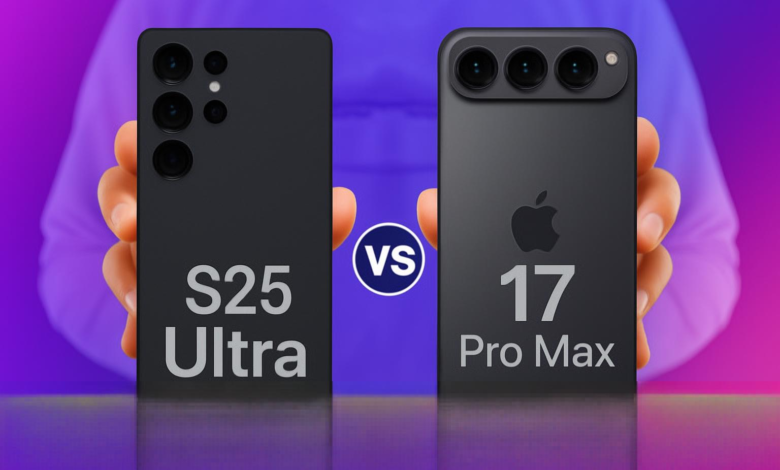
The powerhouse for power users. It features the Snapdragon 8 Gen 3 chip with an integrated X75 modem, offering exceptional speed and efficiency across all 5G bands. Its antenna design is superb, and it supports the latest carrier aggregation technologies for combining 5G signals. The phone is a beast for productivity, gaming, and content creation, making it the ultimate tool to exploit fast 5G connections.
2. iPhone 15 Pro Max
Apple’s flagship is a 5G titan in its own right. Equipped with the custom-designed A17 Pro chip and a Qualcomm X70 modem, it delivers stellar performance on US networks. Apple’s deep integration with carriers allows for optimized performance, and its ecosystem benefits (like high-quality FaceTime over 5G) are a plus. It’s the seamless choice for those invested in Apple’s world.
Value Champions: Mid-Range Marvels
3. Google Pixel 8 Pro
Google’s Tensor G3 chip provides excellent, intelligent connectivity. The Pixel shines in network switching and call screening features that leverage 5G’s low latency. Its camera system uses 5G to back up and process photos in the cloud effortlessly. It offers a near-flagship experience with the cleanest Android software at a slightly lower price point.
4. OnePlus 12
A traditional leader in fast charging and smooth performance, the OnePlus 12 is a speed demon in every sense. Its Hasselblad-tuned camera is excellent, and the Snapdragon 8 Gen 3 ensures top-tier 5G performance. It often undercuts direct competitors on price, offering tremendous value for the specs.
Budget-Friendly 5G Gateways
5. Samsung Galaxy A35 5G
This phone proves you don’t need to spend a fortune to access 5G in the US. It supports key 5G bands, has a great Super AMOLED display, and offers a reliable Samsung experience with years of software updates. It’s the perfect entry point.
6. Google Pixel 7a
Often found on deep discount, the Pixel 7a packs the capable Tensor G2 chip, a fantastic camera, and guaranteed updates. Its 5G performance is robust for the price, making it one of the smartest budget buys.
| Phone | Key 5G Feature | Best For | Approx. Price |
|---|---|---|---|
| Samsung Galaxy S24 Ultra | Snapdragon X75 Modem, full band support | Power users, creatives, gamers | $1,299+ |
| iPhone 15 Pro Max | Qualcomm X70 Modem, carrier optimization | iOS ecosystem users, professionals | $1,199+ |
| Google Pixel 8 Pro | Tensor G3 AI-driven connectivity | Android purists, photography enthusiasts | $999+ |
| OnePlus 12 | Flagship speed at value price | Performance seekers, value buyers | $799+ |
| Samsung Galaxy A35 5G | Essential 5G access | Budget-conscious buyers, first-time 5G users | $399+ |
| Google Pixel 7a | Premium-ish 5G on a budget | Smart shoppers wanting great software & camera | $349+ |
The Verdict on 5G in the US
So, is 5G in the US worth it? For the vast majority of Americans, especially those purchasing a new smartphone, the answer is increasingly yes. The technology has moved past its early adopter phase into mainstream maturity. While the experience is not uniformly revolutionary across the country, the direction is unequivocal: 5G is the present and future of mobile connectivity.
The key is to manage expectations. If you live in or frequently visit areas with mid-band coverage, you will experience a significant upgrade. Even on widespread low-band networks, you gain a more stable and future-ready connection. With 5G access now standard on most plans and phones, the barrier to entry is low. The strategic move is to choose a phone with excellent modem technology and a carrier whose 5G map aligns with your life. Do that, and you’ll be well-positioned to enjoy the fastest, most reliable wireless connectivity America has to offer.
Frequently Asked Questions (FAQs)
- Do I need a new SIM card for 5G?
Most likely, yes. While some newer 4G SIMs may work, carriers recommend (and often require) a 5G-enabled SIM or eSIM for optimal performance and access to all network features. - Does 5G use more data than 4G?
Not inherently. A 5MB email is still 5MB. However, because tasks complete faster and higher-quality streaming (like 4K) becomes effortless, you may naturally consume more data over time. - Can I turn off 5G to save battery?
Yes. All modern 5G phones have settings to force 4G/LTE only. This can extend battery life in areas with weak 5G signals where the phone struggles to maintain a connection. - Is 5G safe? Are there health risks?
Based on current scientific research, 5G is considered safe. It operates within strict international guidelines for radiofrequency exposure. The World Health Organization and FCC state that no adverse health effects have been causally linked from exposure at or below the regulatory limits. - Will 5G make my home internet obsolete?
For most heavy-duty uses (like large file downloads, competitive gaming, or multi-user 4K streaming), fixed broadband (cable/fiber) still offers superior stability and unlimited data. However, 5G Fixed Wireless Access (FWA) from providers like Verizon and T-Mobile is a compelling and growing alternative to traditional home internet, especially in underserved areas.