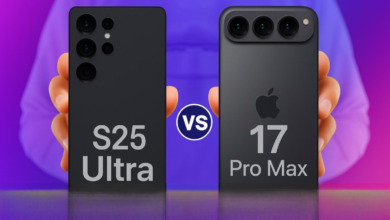
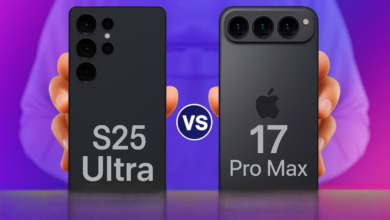
iPhone 17 Pro Max vs Gaming Laptop – the very premise sounds like a mismatch. For decades, the gaming laptop has been the undisputed champion of portable, high-fidelity gaming, a powerhouse capable of rendering vast open worlds and photorealistic characters. Meanwhile, the smartphone, epitomized by Apple’s flagship iPhone, has evolved from a communication device into a pocket-sized supercomputer, with its own thriving ecosystem of casual and increasingly complex games. But with each new iteration, the question grows louder: can the sheer engineering marvel of a device like the iPhone 17 Pro Max truly challenge a dedicated gaming laptop for the ultimate title of running AAA games? This isn’t just a spec sheet comparison; it’s a fundamental exploration of different philosophies in computing, gaming accessibility, and the very future of interactive entertainment.
The Contenders: A Tale of Two Architectures
To understand the battle, we must first meet the combatants. On one side, we have the hypothetical iPhone 17 Pro Max, building upon the trajectory set by its predecessors. We can extrapolate features like Apple’s next-generation A-series chip (perhaps the A21 Pro), built on an even more advanced 2nm or 3nm process, featuring enhanced CPU cores, a more powerful and efficient GPU, and likely a significant boost in unified memory bandwidth and capacity, potentially reaching 12GB or 16GB. Its display will be a masterpiece – a 6.9-inch ProMotion XDR OLED with adaptive refresh rates up to 120Hz or even 144Hz, with incredible brightness and pixel density. Its thermal management, while revolutionary for a phone, is confined to a slim, fanless chassis.
On the other side stands the Gaming Laptop, a category defined by its modularity and raw power. Think of a current high-end model like those featuring an NVIDIA GeForce RTX 4080 or 4090 laptop GPU, an Intel Core i9-14900HX or AMD Ryzen 9 7945HX CPU, 32GB of DDR5 RAM, a 1TB NVMe SSD, and a 16-inch 240Hz QHD display. This machine is engineered with one primary goal: performance. It employs active cooling with multiple heat pipes and fans, allows for some degree of user upgrades (RAM, storage), and draws power from a substantial AC adapter, freeing it from the strict energy constraints of a battery-first device.
| Feature | iPhone 17 Pro Max (Projected) | High-End Gaming Laptop (e.g., RTX 4080) |
|---|---|---|
| SoC/CPU | Apple A21 Pro (6-8 core CPU) | Intel Core i9 / AMD Ryzen 9 (14-16+ cores) |
| GPU | Apple-designed GPU (6-8 cores) | NVIDIA RTX 4080 (12GB GDDR6, 7424 CUDA cores) |
| RAM | 12-16GB Unified LPDDR5X | 32GB DDR5 (Discrete, Upgradable) |
| Cooling | Passive (Advanced Vapor Chamber) | Active (Dual/Quad Fans, Heat Pipes) |
| Display | 6.9″ OLED, 120-144Hz, ~460 PPI | 16″ IPS/LCD, 240Hz QHD, ~180 PPI |
| Power Source | ~4500mAh Battery (30W+ Charging) | 90Wh Battery + 280-330W AC Adapter |
| Ecosystem | iOS, App Store, Metal API | Windows, Steam, Epic, DirectX 12/Vulkan |
Raw Performance and Thermal Realities
On paper, the gaming laptop’s components dwarf those of the iPhone. The RTX 4080’s teraflop count and dedicated VRAM are orders of magnitude greater than any mobile GPU. However, the iPhone 17 Pro Max vs Gaming Laptop debate isn’t about paper specs; it’s about efficiency and optimization. Apple’s A-series chips are legendary for their performance-per-watt. The A17 Pro in the iPhone 15 Pro already demonstrated the ability to run console ports like Resident Evil Village and Death Stranding. The A21 Pro will push this further.
Yet, the thermal ceiling is the iPhone’s immutable constraint. A gaming laptop, under load, can sustain 100-150 watts of GPU power alone, dissipating heat aggressively with loud fans. The iPhone must perform its magic within a strict 5-10 watt thermal envelope for sustained loads. It achieves remarkable feats through incredible silicon efficiency and intelligent performance management, but it cannot compete with the sustained, unthrottled throughput of a laptop’s discrete GPU. The laptop will deliver higher frame rates, higher resolutions, and far more detailed graphics settings—consistently.
The Software and Ecosystem Divide
This is perhaps the most significant chasm. The gaming laptop runs Windows, granting access to the full, unfiltered library of PC AAA games on platforms like Steam, Epic Games Store, and Xbox Game Pass. It supports industry-standard APIs like DirectX 12 and Vulkan. Developers target this platform first, then consider consoles.
The iPhone runs iOS. While the App Store is vast, true AAA games are rare visitors. Ports require massive re-engineering: assets must be drastically optimized, controls rethought for touch (or external controllers), and the game must be built against Apple’s Metal API. The business model is also a hurdle. Selling a $70 game on the App Store is a tough proposition when the market is conditioned for free-to-play or sub-$10 titles. Apple’s solution has been to court developers for direct ports and promote its Apple Arcade subscription, but the library of true AAA experiences remains a tiny niche. The question of iPhone 17 Pro Max vs Gaming Laptop for AAA gaming is currently less about hardware capability and more about software availability.
User Experience: Form Factor and Control
How and where you play is fundamental. The iPhone 17 Pro Max offers unparalleled convenience. Your AAA gaming device is already in your pocket, connected to a cellular network, with a stunning, bright screen perfect for short sessions. You can use touch controls (often suboptimal for complex games) or easily pair a Bluetooth controller like a Backbone or a PlayStation DualSense. However, the small screen, lack of physical keyboard/mouse support for most games, and battery drain are inherent compromises.
The gaming laptop is a dedicated, immersive station. The larger screen, customizable RGB keyboard, precision trackpad (and standard USB ports for a full-sized mouse), and powerful speakers create a enveloping experience. It’s designed for long, focused gaming sessions, often at a desk. Its portability is relative—it’s luggable, not pocketable, and you’ll likely need to be near a power outlet for peak performance.
| Aspect | iPhone 17 Pro Max | Gaming Laptop |
|---|---|---|
| Portability | Ultra-portable, always with you. | Portable but bulky, requires a bag. |
| Play Style | Short-burst, on-the-go, casual sessions. | Long, dedicated, immersive sessions. |
| Primary Controls | Touchscreen, Bluetooth Controller. | Physical Keyboard, Mouse, Gamepad. |
| Setup | Instant-on, pick up and play. | Boot-up, launchers, potential driver updates. |
| Multi-tasking | Limited (Picture-in-Picture, app switching). | Full (game + browser + Discord + etc.). |
The Future: Cloud Gaming and Convergence
The lines are blurring. Technologies like NVIDIA GeForce Now, Xbox Cloud Gaming, and PlayStation Remote Play are becoming more viable. Here, the iPhone 17 Pro Max vs Gaming Laptop dynamic shifts. Both devices become clients streaming games from remote servers. In this scenario, the iPhone’s superior cellular modem, portability, and excellent display could make it a fantastic cloud gaming device, assuming a stable, high-bandwidth connection. The laptop still offers a larger screen and better native controls, but the hardware advantage is neutralized.
Furthermore, Apple’s relentless advancement of its silicon and its push into gaming (evidenced by the Game Porting Toolkit) suggests a future where the iPhone and Mac share a more unified gaming architecture. If the iPhone 17 Pro Max can run a scaled-down but still visually impressive version of a AAA game, and your saved progress seamlessly syncs with a Mac or iPad, the convenience factor becomes a powerful argument.
Verdict: Different Tools for Different Souls
So, can the iPhone 17 Pro Max run AAA games? The answer is a qualified yes—it can run a select few, specially adapted AAA titles with impressive fidelity for its form factor. It is a testament to mobile engineering that we can even have this discussion.
However, in a direct iPhone 17 Pro Max vs Gaming Laptop showdown for the title of “ultimate AAA gaming machine,” the gaming laptop remains the undisputed champion. It offers a vastly larger game library, superior sustained performance, higher graphical fidelity, and the full, unadulterated PC gaming experience with the peripherals to match. It is a device whose primary purpose is gaming.
The iPhone 17 Pro Max, conversely, is a device that can game remarkably well, but its primary identity is that of a communication hub, camera, and life-organizer. It is the ultimate convergence device, nibbling at the edges of dedicated gaming hardware. For the mobile-first gamer who values convenience and is satisfied with a curated list of premium ports and cloud streaming, it is a compelling option. For the enthusiast who demands the absolute best visuals, performance, and access to the entire pantheon of PC games, the gaming laptop is still the only choice. The future is convergent, but for now, the throne remains occupied.
Frequently Asked Questions
- Can the iPhone 17 Pro Max run games like Cyberpunk 2077 or Elden Ring natively?
Currently, no. These games require specific ports developed for iOS/macOS using Apple’s Metal API. While the hardware may eventually be capable, the commercial and developmental effort to downscale these complex titles for mobile is significant and hasn’t happened yet. - Is a gaming laptop better value for money than an iPhone for gaming?
For pure gaming, absolutely. A $2000 gaming laptop delivers far more gaming performance than a $1200 iPhone 17 Pro Max. The iPhone’s cost includes its world-class camera system, cellular connectivity, and brand premium, which are not gaming-centric features. - Can I connect my iPhone to a monitor and use a mouse/keyboard for gaming?
Yes, via USB-C or AirPlay. However, game support for external monitor resolution and mouse/keyboard input is not universal. Most iOS games are designed for touch or controller input, not a desktop-style UI. - Will cloud gaming make this hardware comparison irrelevant?
It will lessen the gap, but not eliminate it. Cloud gaming requires excellent, low-latency internet, which isn’t available everywhere. A gaming laptop offers offline play, mod support, and ownership of game files, which cloud services do not. - What is the single biggest advantage of the iPhone for gaming?
Ubiquity and convenience. The best gaming device is the one you have with you. The ability to play a quality game during a commute or a break, on the device already in your pocket, is a transformative advantage over a laptop that sits in your bag.