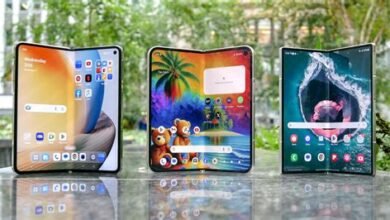
Foldable phones have journeyed from a futuristic concept at tech shows to tangible, albeit expensive, devices in our pockets. As we stand in 2026, the question that once dominated early conversations has evolved but not vanished: are foldable phones still just gimmicks, or have they finally matured into the definitive next form factor for mobile computing? The answer is nuanced, shaped by leaps in durability, software integration, market diversification, and a shifting value proposition. The era of the fragile, app-incompatible novelty is largely over, replaced by a generation of devices that compellingly argue for their place in the mainstream, even as they navigate the final frontiers of universal acceptance.
The Evolution from Novelty to Norm
The initial wave of foldable phones, circa 2019-2021, was marred by legitimate concerns. Screens were prone to scratching and catastrophic failure, hinges collected debris, prices were astronomical, and software often felt like a stretched-out version of the standard smartphone experience. They were, for many early adopters and critics alike, the very definition of a gimmick—a flashy feature in search of a fundamental problem to solve.
Fast forward to 2026, and the landscape is transformed. The core hardware has undergone a silent revolution. Ultra-thin glass (UTG) substrates are now incredibly resilient, with fold durability ratings routinely exceeding 1,000,000 folds—translating to over 100 folds per day for a decade. Hinge mechanisms are not only more robust but also smarter, enabling multi-angle freestanding modes for hands-free use. The once-noticeable crease has been minimized to a faint shadow under direct light, a non-issue for most users. This hardware maturation is the foundational step that moved foldable phones out of the “fragile toy” category.
The 2026 Foldable Ecosystem: A Market Maturing
No longer a monolithic category, the foldable phones market in 2026 has diversified to cater to different user needs, which is a key indicator of moving beyond a gimmick. Gimmicks are one-trick ponies; mature product categories offer choice.
| Form Factor | Key Features (2026) | Target User | Price Point Trend |
|---|---|---|---|
| Book-Style (Vertical Fold) | Large inner display (8-9″), flagship specs, productivity-focused software, slimmer design when folded. | Professionals, multimedia consumers, power users. | Premium ($1400-$1800), slowly converging with top-tier slabs. |
| Clamshell (Horizontal Fold) | Extreme portability, flagship or high-mid-range specs, focus on style and compactness. | Fashion-conscious users, those prioritizing pocket space, secondary device users. | Broad ($800-$1200), becoming highly competitive. |
| Tri-Fold/Scrollable | Tablet-to-phone transformation, expansive screens (10+ inches when unfolded), niche applications. | Tech enthusiasts, specific professional fields (architecture, design). | Ultra-Premium/Niche ($2000+) |
This diversification proves that manufacturers are no longer just experimenting with folding for its own sake. They are strategically deploying the technology to solve specific user pain points: portability versus screen real estate. The clamshell directly attacks the problem of ever-growing phone sizes, while the book-style offers a legitimate tablet replacement in a pocketable form.
The Software Symphony: Where Folding Finds Its Purpose
Hardware is only half the story. The true measure of a gimmick is whether the software experience leverages the unique form factor meaningfully. In 2026, foldable phones finally have an OS and app ecosystem that feels native. Operating systems like Android (and its various manufacturer skins) have deeply integrated foldable-specific features.
App continuity is seamless; an app opened on the cover screen intelligently adapts its layout when you unfold the device. Multi-tasking is no longer a clunky afterthought but a core interaction model. Persistent taskbars, drag-and-drop between apps, and independent windowing on the large canvas make these devices genuine productivity tools. Furthermore, developers, seeing the growing install base, now regularly build adaptive layouts for their apps as a standard practice. The software experience in 2026 validates the hardware’s existence, moving it from a party trick to a practical workflow enhancer.
Foldable Phones: Addressing the Remaining Skepticism
Despite the progress, skepticism persists, and rightly so. The final hurdles for foldable phones to completely shed the “gimmick” label revolve around durability, cost, and weight.
While durability has improved exponentially, the perception of fragility lingers. Repair costs for the inner screen remain high, though insurance and warranty programs have become more comprehensive. The price premium, while narrowing, still exists. A flagship book-style foldable can command a 20-30% premium over a comparable top-tier slab phone. For many, that extra cost is hard to justify for a feature—folding—they have lived without for decades.
Additionally, physics still imposes constraints. Foldable phones are generally thicker when folded and heavier than their rigid counterparts. This tangible difference in daily handling is a constant reminder of the technology’s compromise. Until these devices can match the sleekness and weight of a traditional phone in its folded state, a segment of users will remain unconvinced.
The Verdict: Niche Transcended, Mainstream Embraced?
So, are foldable phones in 2026 still gimmicks? The resounding answer for the majority of the market is no. They have evolved into a legitimate, mature, and increasingly popular product category. The gimmick phase was the proof-of-concept; 2026 is the era of refinement and value proposition.
For professionals, travelers, and multimedia enthusiasts, the book-style foldable offers a tangible benefit that justifies its cost: a tablet and a phone in one device, with software smart enough to bridge the gap. For those yearning for compactness, the clamshell delivers a unique proposition that no slab phone can match. The innovation is no longer about “folding for folding’s sake” but about enabling new form factors that cater to specific lifestyles and use cases.
However, they are not yet for everyone. For users whose priorities are absolute durability, lowest possible cost, or the lightest/thinnest device, the traditional smartphone remains the superior choice. In this sense, foldable phones have not replaced the slab; they have successfully expanded the smartphone spectrum.
In conclusion, foldable phones in 2026 are far from gimmicks. They are specialized tools that have found their audience and purpose. They represent the most vibrant arena of innovation in the mobile industry, pushing the boundaries of what a pocket computer can be. The crease may not be completely invisible, and the price not yet for all, but the conversation has decisively shifted from “why does it fold?” to “how does folding improve my day?” That is the definitive mark of a technology that has graduated from gimmickry to genuine utility.
Frequently Asked Questions: Foldable Phones in 2026
- How long do foldable phone screens last in 2026? Most manufacturers now rate their flagship foldable phones for over 1,000,000 folds, which equates to more than 10 years of normal use (approx. 270 folds per day). Real-world durability is significantly higher than earlier generations.
- Are apps optimized for foldable displays now? Yes, the ecosystem has matured. Major apps from social media, productivity, and entertainment developers routinely offer optimized, adaptive layouts for foldable phones. Operating systems also provide excellent default scaling and multi-tasking frameworks.
- Is the crease still visible on 2026 foldable phones? The crease has been dramatically minimized. While not completely invisible under all lighting conditions, it is generally faint and unobtrusive, and most users report not noticing it during regular use.
- Are foldable phones as durable as regular smartphones? They are highly durable but have different failure points. While water and dust resistance is now common (IPX8), the inner screen remains more susceptible to sharp impacts or punctures than Gorilla Glass Victus. Overall robustness, however, is no longer a major concern for daily use.
- What is the average price difference between a foldable and a flagship slab phone? The premium has shrunk. In 2026, a book-style foldable typically costs 20-30% more than a comparable top-end traditional flagship. Clamshell models often compete directly with high-tier non-folding phones.
- Can foldable phones replace my tablet? For most users, yes, especially book-style models. Their large inner displays (8-9 inches), combined with enhanced multi-tasking software, make them excellent for media consumption, light work, and reading, effectively consolidating two devices into one.