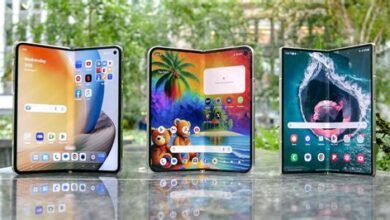
Compact phones 2026 are not a nostalgic throwback; they are a definitive statement about the future of personal technology. After years of screens stretching to tablet-like proportions, a powerful counter-movement has reached its zenith. The latest releases for 2026 prove that cutting-edge innovation can be elegantly contained, offering a blend of raw power, professional-grade features, and unparalleled portability that redefines what a smartphone can be. This year’s models are engineering marvels, packing flagship components into frames that disappear into your palm, yet refuse to compromise on performance, camera quality, or battery life. The era of the pocket-sized powerhouse is here, and it is more compelling than ever.
The Renaissance of Refined Form Factors
The driving philosophy behind the compact phones 2026 generation is “conscious computing.” Users are increasingly seeking devices that complement their lives rather than dominate them. This means a phone that fits comfortably in any pocket, can be used securely one-handed, and doesn’t create an unwieldy bulge in slim-fit clothing or small bags. Manufacturers have responded not by shrinking old designs, but by reimagining the smartphone stack from the inside out. Custom, smaller logic boards, stacked battery cells, and under-display everything (from fingerprint sensors to front cameras) have freed up precious internal real estate. The result is a portfolio of devices that feel dense with quality—premium materials like titanium, ceramic, and recycled aluminum are the norm, offering a satisfying heft that belies their miniature dimensions.
Flagship Performance in a Miniature Chassis
Gone are the days when “compact” meant “compromised.” The 2026 cohort is powered by the latest generation of 3nm and 2nm chipset architectures, such as the Qualcomm Snapdragon 8 Gen 5 and the Apple A19 Bionic. These processors are not only more powerful but significantly more energy-efficient and thermally manageable. This allows them to run cool and fast within a smaller thermal envelope. Coupled with LPDDR6 RAM and UFS 4.1 storage, these compact phones 2026 deliver performance that matches, and in some sustained workloads, surpasses their larger siblings, as heat dissipation is more efficient across a concentrated area. Gaming, 4K video editing, and AI-assisted tasks are handled with effortless grace, shattering the myth that power requires physical bulk.
Display Technology: Maximizing the Real Estate
The screens on these devices are masterclasses in borderless design. Utilizing advanced flexible OLED panels with micro-curved edges and near-invisible bezels, manufacturers achieve screen-to-body ratios exceeding 95%. The standard for high-refresh-rate is now 1-120Hz LTPO 4.0, enabling buttery-smooth scrolling that can drop to a single hertz for static content to save power. Peak brightness for HDR content now regularly hits 3000 nits, ensuring perfect visibility under any lighting. Perhaps the most significant leap is in durability: the latest Ceramic Shield and Gorilla Glass Victus 5 offer scratch resistance that approaches sapphire crystal, making screen protectors an optional extra rather than a necessity for the first time.
Camera Systems: Professional Grade, Pocket-Sized
The camera has become the most potent battleground for compact phones 2026. The limitation of physical space for large sensors has been ingeniously overcome. The trend is towards fewer, but larger and more capable, sensors. The primary sensor is now typically a 1-inch-type 50MP or 64MP unit with a variable aperture (f/1.4-f/2.8). The telephoto lens, a staple of this form factor, has seen dramatic improvements, with most flagships offering a genuine 5x or 6x optical periscope zoom that maintains stunning clarity. Computational photography, powered by dedicated NPUs on the new chipsets, enables real-time semantic processing—the camera understands what it’s looking at (sky, skin, foliage) and optimizes parameters for each element in the frame before you even press the shutter. Night mode is now instantaneous, and 8K HDR recording at 60fps is standard fare.
| Model | Screen Size | Chipset | Key Camera Spec | Battery (Typical) |
|---|---|---|---|---|
| Apple iPhone SE 4 (2026) | 5.8″ | Apple A19 Bionic | Dual 48MP (Main + 5x Tele) | 3200 mAh |
| Samsung Galaxy S26 Compact | 6.1″ | Snapdragon 8 Gen 5 | 200MP Adaptive Pixel, 10x Hybrid Zoom | 4000 mAh |
| Google Pixel 8a (2026) | 6.0″ | Google Tensor G4 | Gen 2 Computational HDR+ | 3800 mAh |
| ASUS Zenfone 12 | 5.9″ | Snapdragon 8 Gen 5 | Gimbal Stabilization 3.0 | 4300 mAh |
Battery and Charging: All-Day Power, Less Wait
The most pleasant surprise in the 2026 compact phone lineup is battery life. Through a combination of more efficient components, intelligent software management, and the use of high-density silicon-anode batteries, these small phones easily last a full day of heavy use. A 4000mAh capacity in a body the size of an old 5.8-inch phone is now common. Wireless charging speeds have caught up with wired, with 50W Qi2 magnetic standard charging allowing for a full top-up in under 40 minutes. The focus on sustainability is also evident, with most brands guaranteeing battery health above 80% for at least 1000 full cycles, ensuring the device’s longevity matches its premium price tag.
Software and Ecosystem: Tailored for the Compact Experience
Software plays a crucial role in enhancing the compact phones 2026 experience. Operating systems have introduced refined one-handed modes that are more intuitive and accessible. Widgets and app icons can dynamically scale, and keyboard options float or shrink to the side. Furthermore, the AI integration is more context-aware, anticipating needs based on time, location, and activity, reducing the need for prolonged screen interaction. These devices are also the perfect companions for the expanding wearable ecosystem—seamlessly connecting to smart rings, compact AR glasses, and lightweight headphones to distribute the computing load and keep the primary interface quick and glanceable.
Market Overview and Top Contenders
The market for premium compact phones has solidified into a key segment. Apple continues its approach with a revamped iPhone SE line, now featuring a modern design and a dual-camera system. Samsung’s Galaxy S26 Compact is a true mini-flagship, inheriting every major feature from the S26 Ultra in a manageable form. Google’s Pixel ‘a’ series remains the king of computational photography and pure Android at a competitive price. Dark horses like ASUS with its Zenfone 12 cater to power users with unique features like desktop docking and hyper-fast touch sampling rates for gaming. Each model makes a compelling case for why compact phones 2026 are the smartest choice for the discerning user.
Conclusion: The Future Fits in Your Palm
The narrative is clear: bigger is no longer synonymous with better. The compact phones 2026 represent the pinnacle of smartphone design—where restraint is viewed as a feature, not a limitation. They offer a complete, uncompromised flagship experience that respects the user’s space, style, and need for effortless mobility. For anyone tired of two-handed gymnastics, pocket strain, and the constant, obtrusive presence of a phablet, this year’s releases are a revelation. They prove that the most powerful tool is the one you barely notice until you need it, and in 2026, that tool fits perfectly in the palm of your hand.
Frequently Asked Questions
- Do 2026 compact phones have good battery life? Yes, absolutely. Advances in battery density and chipset efficiency mean the latest compact phones easily last a full day, with many surpassing their larger counterparts in screen-on-time per mAh.
- Are the cameras on small phones as good as on big flagships? In many cases, they are identical or very close. Manufacturers are putting their best camera sensors and software into their compact models. The main difference may be in ultra-wide angle specs, but primary and telephoto lenses are often flagship-grade.
- Is performance compromised in a smaller body? No. The latest 3nm/2nm chipsets run cooler and more efficiently. Performance is flagship-level, and the smaller thermal surface can sometimes lead to better sustained performance than in larger, hotter devices.
- What is the typical screen size for a “compact” phone in 2026? The sweet spot is between 5.8 inches and 6.1 inches, measured on the diagonal. These sizes allow for ample display area while maintaining a body width that facilitates secure one-handed use.
- Are compact phones more expensive? They are positioned as premium flagships, so they carry a flagship price tag. However, they are priced comparably to standard-sized flagships, not at a premium for their size. Options like the Google Pixel ‘a’ series offer a more budget-friendly entry point.