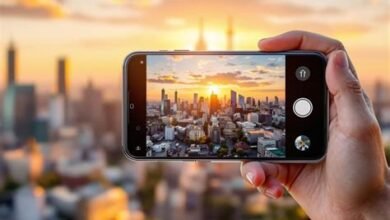
iPhone vs Samsung camera. This perennial debate defines the smartphone landscape, especially in the United States, where brand loyalty runs deep and the quest for the perfect photo is a national pastime. For years, Apple’s iPhone and Samsung’s Galaxy S and Z series have been locked in a fierce battle for photographic supremacy. This isn’t just about megapixels; it’s a clash of philosophies. Apple champions a seamless, computational photography-driven experience that “just works,” while Samsung offers a powerhouse of hardware flexibility and AI-driven customization. In this comprehensive US review, we’ll dissect the current flagship offerings—like the iPhone 15 Pro Max and the Samsung Galaxy S24 Ultra—across various real-world scenarios to determine which camera system might be the right tool for your creative vision.
The Core Philosophies: Computational Artistry vs. Hardware Prowess
Understanding the iPhone vs Samsung camera rivalry starts with their foundational approaches. Apple’s strategy is deeply integrated. The company designs its own A-series chips and tightly controls both hardware and software (iOS). This allows for an unparalleled level of optimization. Apple’s computational photography, powered by the Neural Engine, works relentlessly in the background. From the moment you open the Camera app, it’s taking multiple exposures, analyzing scenes, and merging data to produce a single, polished image. The goal is consistency and a pleasing aesthetic with minimal user effort—think vibrant but natural colors, balanced exposure, and exceptional skin tone rendering.
Samsung, conversely, often leads with raw hardware innovation. It was an early adopter of high-megapixel sensors, periscope telephoto lenses for incredible zoom, and ultra-wide sensors with massive pixel sizes. Its philosophy leans into giving users more: more lenses, more resolution, more manual control via Expert RAW and Pro mode, and more AI-powered editing tools directly in the gallery. The result is a system that can achieve spectacular feats (like 100x Space Zoom) and offers immense flexibility, but sometimes at the cost of consistency across different lenses or lighting conditions.
Daylight and Detail: The Megapixel Myth
In ample lighting, both systems produce stunning, share-worthy images. However, their character differences become apparent. The iPhone vs Samsung camera showdown in daylight often highlights a key divergence: color science. iPhones tend to deliver true-to-life colors with a slight cool, contrasty tone that many Americans associate with a “premium” look. Details are sharp but often smoothed through computational processing, especially on textures like foliage or brick.
Samsung’s images are typically more vibrant and saturated straight out of the camera. Blues are bluer, greens are greener, and reds pop. This can make scenes look immediately more dramatic and appealing on a phone screen. In terms of pure detail, when using the full resolution of its high-megapixel mode (e.g., 200MP on the S24 Ultra), Samsung can capture an astonishing amount of information, allowing for extreme cropping. The iPhone relies on its 24MP default or 48MP HEIF shots, which offer excellent detail but prioritize manageable file sizes and a balanced approach.
Low-Light and Night Photography
This is where computational photography reigns supreme. Both brands have excellent Night modes, but their execution varies. Apple’s Night mode is automatic and deeply integrated. The iPhone decides when to activate it, and the process is seamless, often producing bright, clean images with controlled noise and maintained shadows. The focus is on creating a natural-looking night scene, not turning night into day.
Samsung’s Night mode is also powerful but can be more aggressive. It often brightens shadows more significantly and can sometimes over-sharpen details, leading to a slightly artificial look. However, its larger sensor sizes on some models (like the Ultra) can capture more light physically, providing a solid foundation for its software to work with. For purists, Samsung’s Expert RAW mode allows for manual long exposures, offering creative control that the iPhone’s stock app lacks.
Portrait Mode: The People’s Choice
For portrait photography, the iPhone vs Samsung camera debate is intensely personal. The iPhone has long been the benchmark for natural-looking bokeh and superb skin texture management. Its subject detection (for people, pets, and objects) is incredibly fast and accurate, creating a gentle depth-of-field effect that mimics high-end DSLR lenses. Skin tones are rendered flatteringly and consistently.
Samsung offers more tools and styles. You can adjust the blur level both during and after the shot, and choose from various bokeh shapes (hearts, stars, etc.). Its AI is excellent at edge detection, though it can occasionally struggle with complex subjects like frizzy hair. Some users find Samsung’s skin softening to be too aggressive by default, though this can be tuned in settings. It provides a more “glamorous” look out of the box, whereas Apple aims for a refined realism.
Video Performance: The iPhone’s Stronghold
When it comes to video, the iPhone is widely regarded as the king. Its strengths in consistency, stabilization (especially with the Cinematic mode and Action mode), and dynamic range are unmatched for a smartphone. Colors remain true across different lenses, and the transitions between lenses while recording are the smoothest in the industry. For vloggers, content creators, or anyone who prioritizes video, the iPhone remains the default choice in the US market.
Samsung has closed the gap significantly. Video quality from the latest Galaxy Ultras is superb, with excellent detail and stabilization. However, it can still exhibit slight color shifts when switching between lenses, and its computational processing can sometimes introduce a “jelly” effect or over-sharpen moving subjects. It offers more manual video controls (8K recording, advanced mic controls), but for the average user seeking flawless, effortless video, the iPhone holds an edge.
Zoom Capabilities: Samsung’s Arena
This is a clear win for Samsung, particularly with the Ultra models and their periscope telephoto lenses. The Galaxy S24 Ultra’s 5x optical zoom (and up to 10x optical quality zoom) allows for incredibly detailed shots at distances that the iPhone simply cannot match optically. While the iPhone 15 Pro Max’s 5x tetraprism lens is a great improvement, Samsung’s zoom system is more versatile and powerful for capturing distant subjects.
| Zoom Type | iPhone 15 Pro Max | Samsung Galaxy S24 Ultra |
|---|---|---|
| Optical Zoom | 5x (120mm equivalent) | 5x (115mm) & 10x (optical quality) |
| Digital Zoom Max | 25x | 100x (Space Zoom) |
| Best Use Case | Portraits, clean mid-range zoom | Extreme distance, moon shots, detail capture |
Software, Interface, and Ecosystem
The camera experience extends beyond the sensor. The iPhone’s Camera app is famously minimalist. You point and shoot. Advanced features like Photographic Styles or ProRAW are there if you seek them, but hidden from the default view. This simplicity is its greatest strength and, for pros, a minor weakness. Editing in the Photos app is also intuitive and powerful.
Samsung’s Camera app is a feature-packed hub. Modes like Single Take (which captures a burst of photos and videos with one click), Fun modes, and a fully-featured Pro mode are front and center. Its integration with Google Photos and advanced editing suite (like object eraser and shadow remover) post-capture is incredibly powerful. The learning curve is steeper, but the toolkit is vast.
Making Your Choice: iPhone vs Samsung Camera for the US User
So, who wins the iPhone vs Samsung camera battle? The answer depends entirely on you.
Choose the iPhone if: You value consistency, effortless video recording, natural-looking portraits, and a seamless point-and-shoot experience. You’re deeply invested in the Apple ecosystem (iCloud, AirDrop, Mac) and want your camera to work perfectly within it. You prefer a more realistic color profile and industry-leading video stability.
Choose the Samsung Galaxy if: You crave hardware flexibility, incredible zoom capabilities, and vibrant, social-media-ready photos straight from the camera. You enjoy tinkering with manual controls, AI editing tools, and a vast array of shooting modes. You prioritize having the latest hardware innovations and don’t mind a slightly steeper learning curve to master your device’s full potential.
Frequently Asked Questions
- Which phone has better battery life for extended photo/video sessions? Both are comparable, but the Samsung S24 Ultra often has a slight edge due to its larger battery, though this is heavily dependent on usage. The iPhone is highly optimized for efficient photo processing.
- Can I use third-party camera apps to get better photos? Yes. Apps like Halide or ProCam offer more manual control on iPhone, while ProShot or Adobe Lightroom can leverage Samsung’s hardware. However, you often lose access to the proprietary computational photography stacks of the native apps.
- Which phone is better for posting directly to Instagram or TikTok? Both are excellent. Samsung’s more vibrant colors might look better initially on social feeds, but iPhone’s consistency and superior video are favored by many content creators.
- How do the front-facing (selfie) cameras compare? iPhones typically offer more natural skin tones and better dynamic range. Samsung selfies are often brighter, smoother, and more aggressively beautified by default, though these settings can be adjusted.
- Is the Samsung Galaxy’s 200MP mode actually useful? For everyday shooting, it’s overkill and creates huge files. It’s most useful for situations where you plan to crop the image significantly or print it on a very large scale, as it retains immense detail.
In the final analysis, the iPhone vs Samsung camera contest reveals two pinnacles of mobile photography taking different paths to excellence. There is no outright loser. For the US consumer, the choice boils down to a preference for Apple’s curated, reliable, and video-dominant experience or Samsung’s feature-rich, hardware-pushing, and creatively flexible alternative. Whichever you choose, you are holding a device capable of capturing professional-grade imagery, proving that the best camera is ultimately the one you have with you—and in 2024, both of these options are phenomenally good.